Pacific Village Explorer
Top 12 finalist · 2026 Humanitarian Innovation Hackathon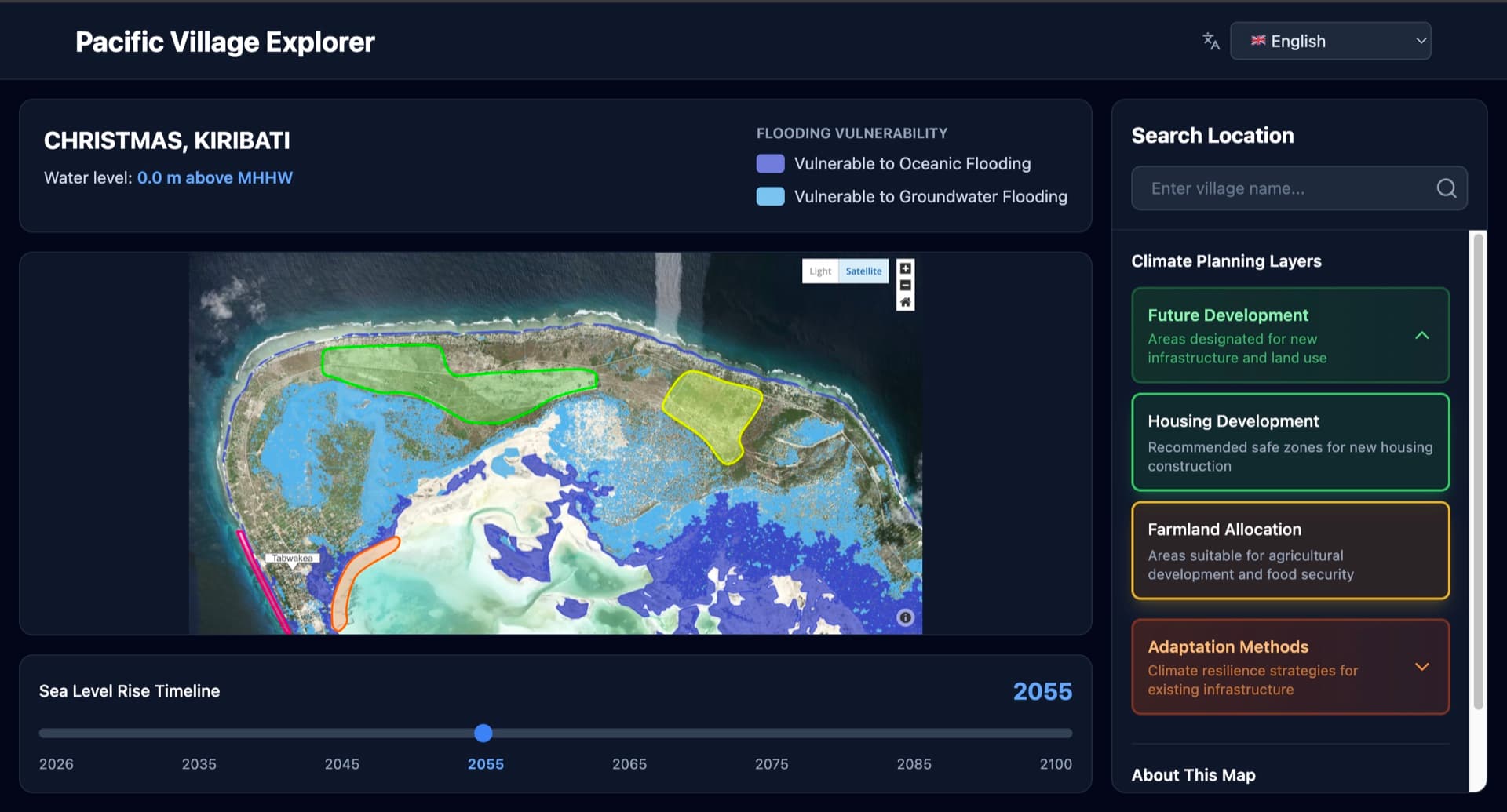
Problem
A village council deciding where to rebuild after a flood, where to move a school, or how to farm ground turning saline has no way to see its own coastline in twenty years. The digital twin platforms that answer that cost over $10,000 per site and need technical staff villages do not have.
Approach
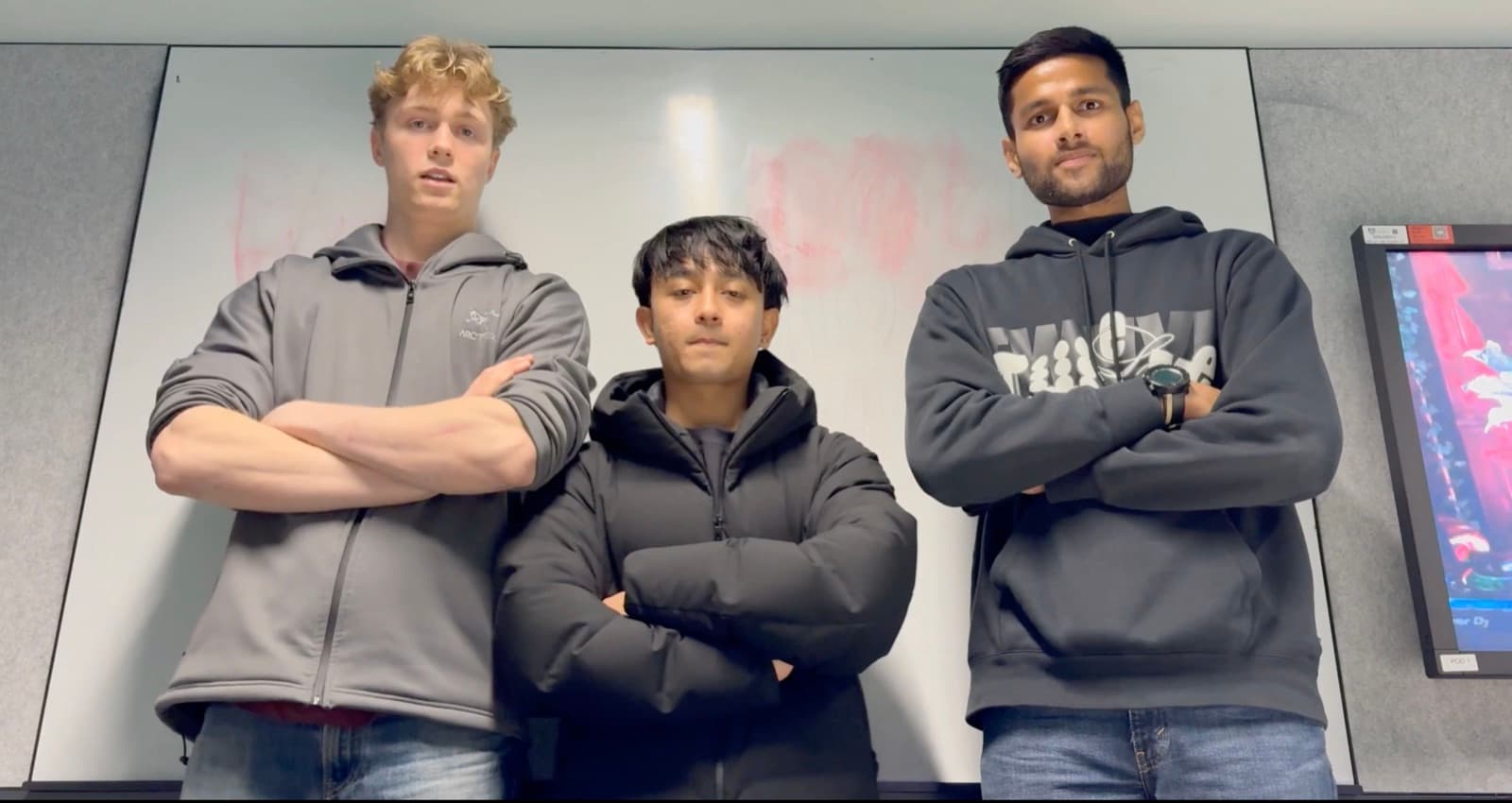
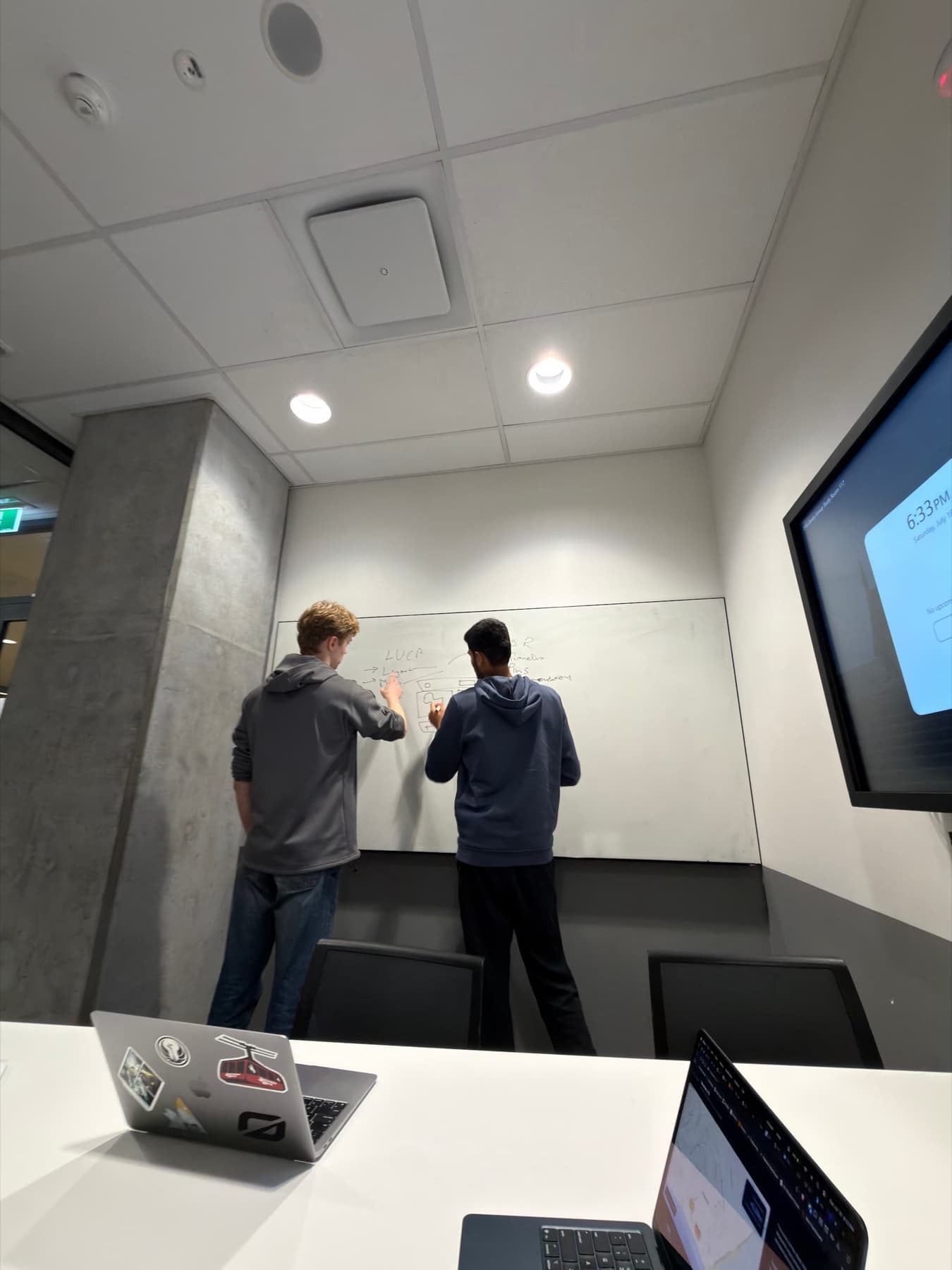
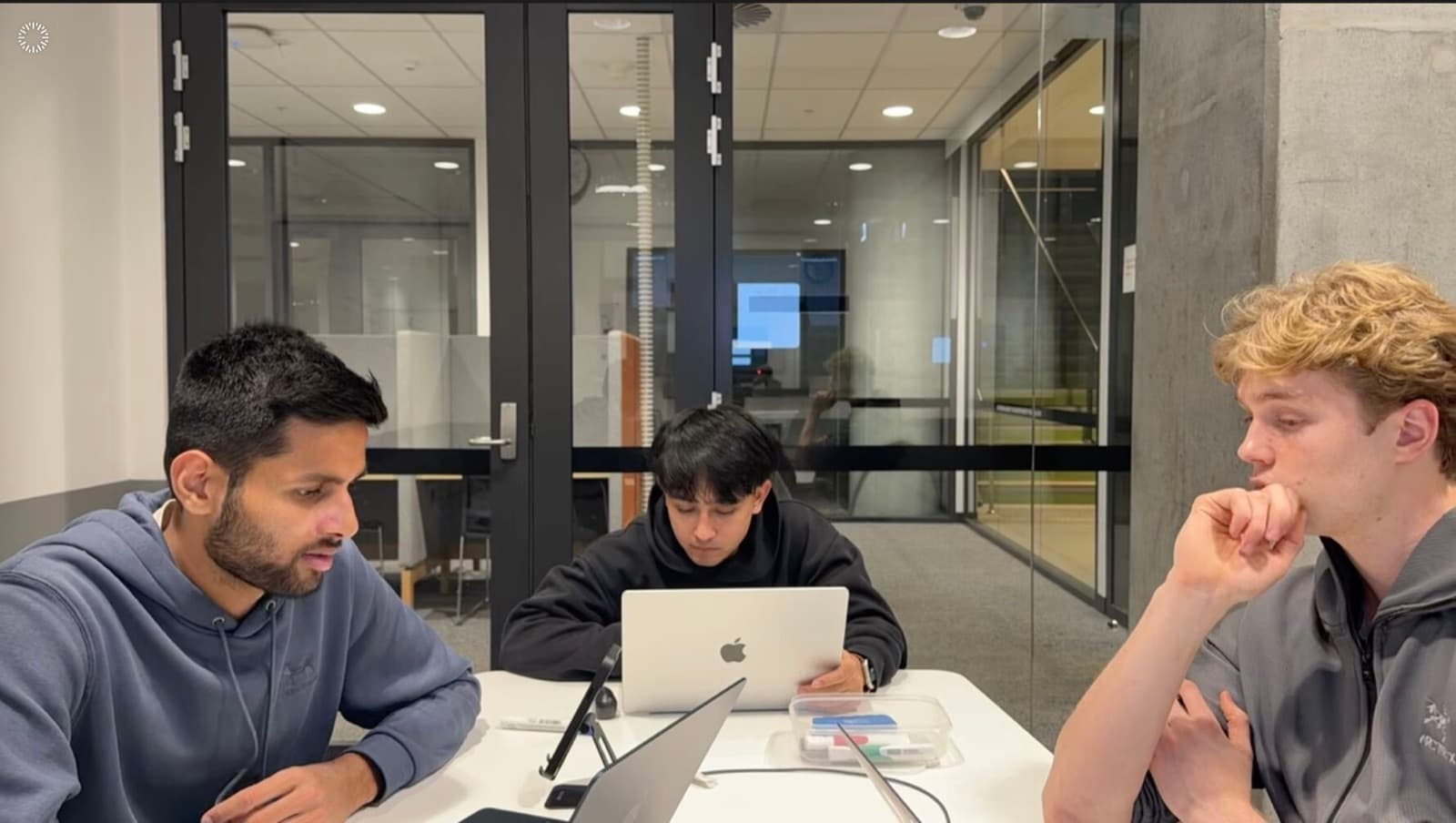
Built in 44 hours at the University of Sydney with a team put together on day one, across three universities. A coordinator picks their village, drags a timeline from 2026 to 2075, and watches houses, wells, farms and sacred sites change status as the water rises, with adaptation options for every asset at risk.
I led the AI recommendation engine. Each prompt carries the village's real context into the Claude API: its population, budget, cultural constraints, sacred sites and available labour, alongside IPCC AR6 and SPREP climate data. Guardrails keep every recommendation tied to what that council can actually do, instead of generic climate advice.
Impact
Top 12 of 75 submissions from 110 teams, and the only Adelaide University student to reach the Grand Final, where we pitched in Sydney on 19 August. Judged by a panel including Sir Peter Cosgrove, Canva, Commonwealth Bank's AI Scientist and the Pacific Region Infrastructure Facility. Under $500 per village against $10,000+ for the alternatives, on any phone from the last five years.
React · Vite · Tailwind · Leaflet · Claude API · Vercel